

In our analyses, we regularly examine current movements, identify possible influencing factors and assess the general market situation. However, these are not recommendations, but merely opinions and food for thought.
Find out more about Pretiorates.com
Pretiorates’ Thoughts – When Bonds Start Talking, Stocks Should Listen
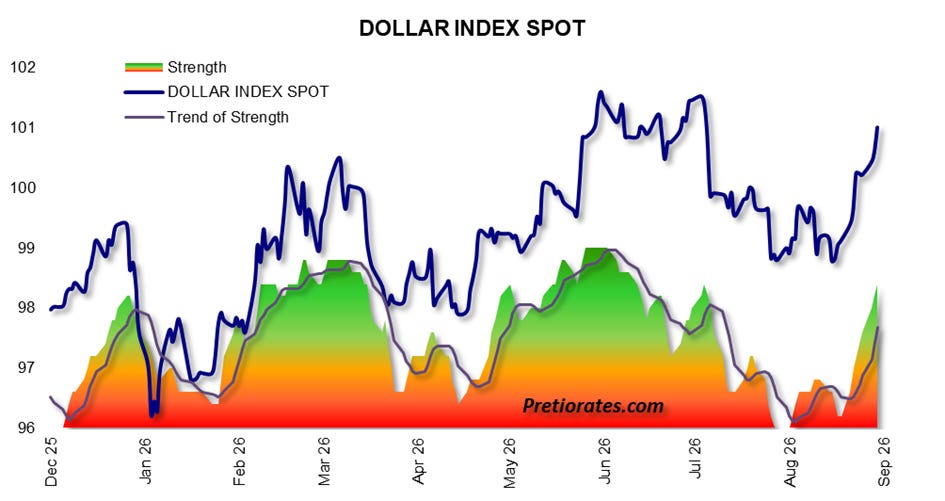
Market yields continue to rise. The yield on the 10-year U.S. Treasury note now stands at 5.09%, well above the psychologically important 5% mark. This is the highest level since June 2007—that is, in nearly 20 years. Generally speaking, higher interest rates are positive for a currency. Accordingly, the U.S. dollar continues to gain ground against other currencies.
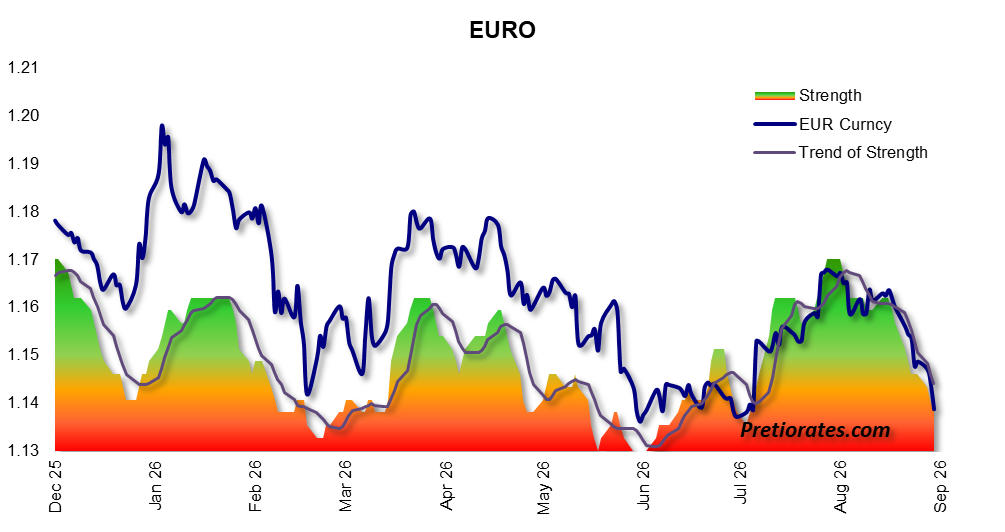
The euro, on the other hand, has once again taken a significant hit in recent weeks. And this despite the fact that market yields are also rising steadily in Europe.
It’s obvious: The market has recently undergone a shift. The focus is moving away from inflation and monetary policy—toward fiscal credibility. The key question is no longer primarily how aggressively central banks need to combat inflation. After all, interest rate hikes are only of limited help when rising prices are primarily caused by a supply problem. Higher interest rates, after all, do not produce any additional diesel. On the contrary: in a tight spot, they make investments more expensive and tend to make supply even scarcer.
The crucial question now is whether policymakers are credible. Will deficits ever be reduced? Will the debt burden finally be addressed? Are there credible measures to put public finances back on a sustainable path? Because such a development is currently hardly foreseeable in any country, the market is increasing the pressure—not with a sledgehammer, but slowly, steadily, and extremely effectively.
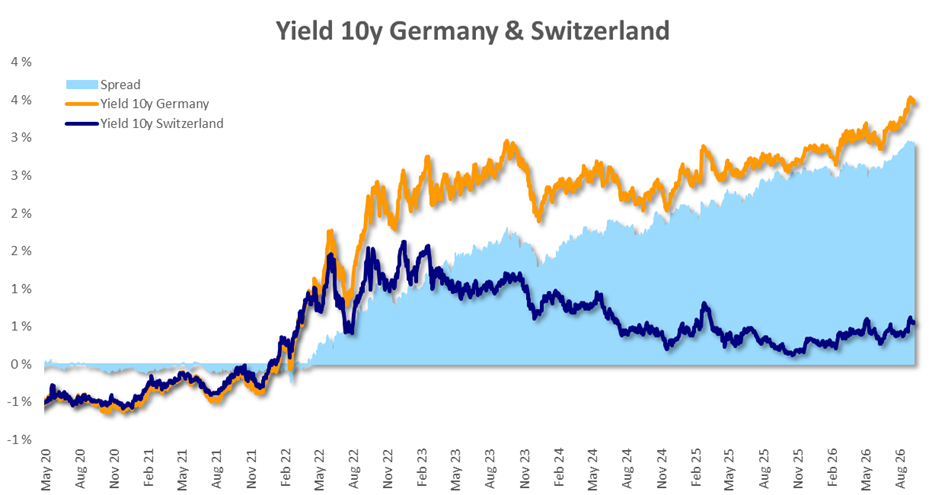
In Europe—if not worldwide—there is really only one country left that has its finances comparatively well under control: Switzerland. As recently as four years ago—that is, roughly until the outbreak of the war in Ukraine—Swiss and German 10-year government bonds yielded nearly the same rate. Since then, the spread has widened continuously and now stands at around three percentage points. Financial professionals refer to this as 300 basis points, which is an enormous amount. This is no longer a minor blemish, but a clear message from the market.
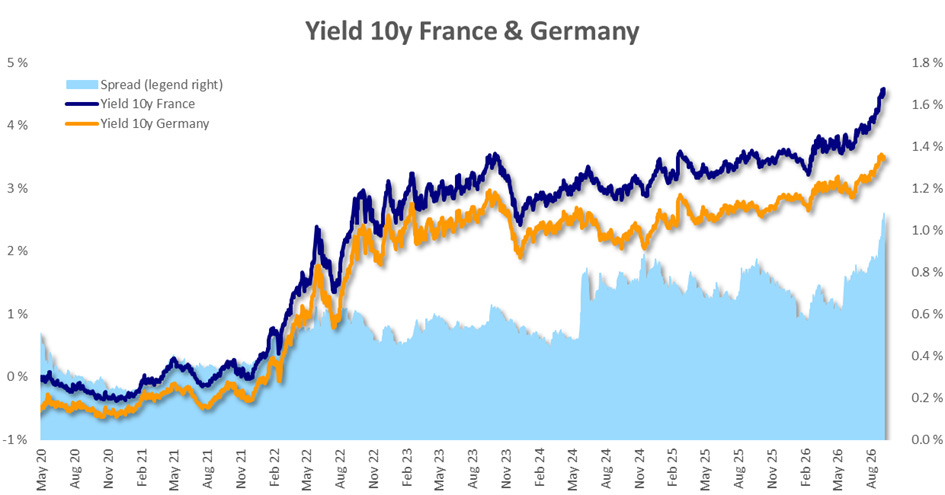
We’ve seen in recent weeks, with the elections in various federal states, that unity in German politics isn’t exactly at Champions League level right now. Things are even less harmonious in France, however. For years, the yield spread between French government bonds and German Bunds stood at around 0.20% or 20 basis points. Over the past two years, it has risen to around 80 basis points. In recent days, the next stage of the rocket has been ignited: the spread has climbed to well over 100 basis points, or more than 1%. The market’s message could hardly be clearer: confidence is waning, and the fuse is getting shorter.
Consequently, the willingness to invest in German, French, and other European assets is also declining. And this gives rise to a debt and currency problem that marks a crucial difference from the U.S. dollar: The euro is not a global reserve currency like the greenback. An international corporation or a government doesn’t really need euros to purchase many commodities. At the same time, the ECB has significantly less leeway to implement programs like QE without putting the euro under even greater pressure.
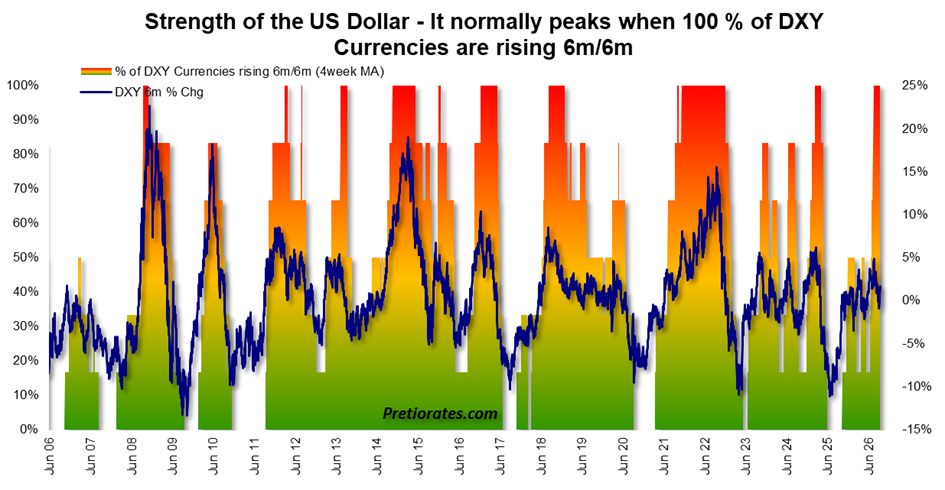
So what do global investors do when they want to pull out of the euro? They look for alternatives. And there aren’t too many of those left. The yen—which recently even had to be propped up—and the U.S. dollar. As a result, the capital of major international investors almost inevitably finds refuge in the greenback, aside from their respective home currencies. Ironically, the U.S. dollar, of all things, thus becomes the last safe haven. Our greenback strength indicator confirms this picture: The U.S. dollar has recently reached a strength of 100% again against all other major currencies.
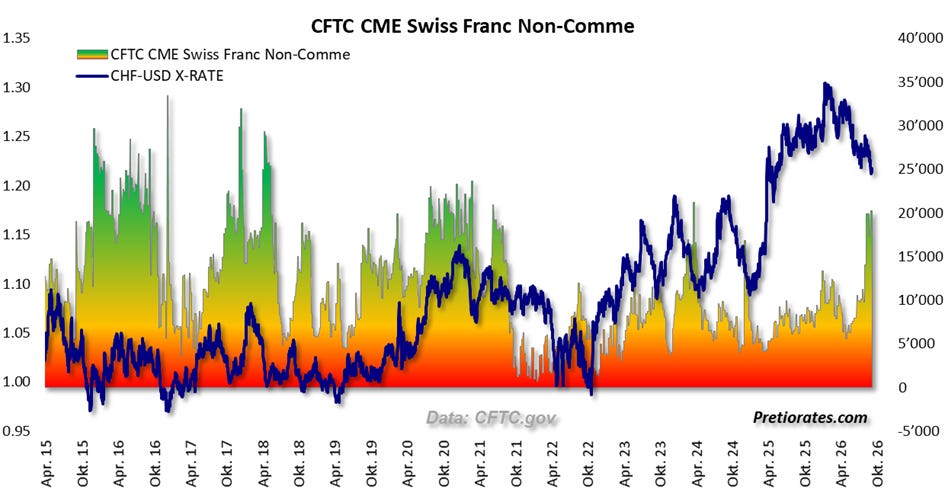
At the same time, we’re seeing a significant increase in investments in traditional safe-haven currencies. Long positions in Swiss franc futures have risen sharply recently.
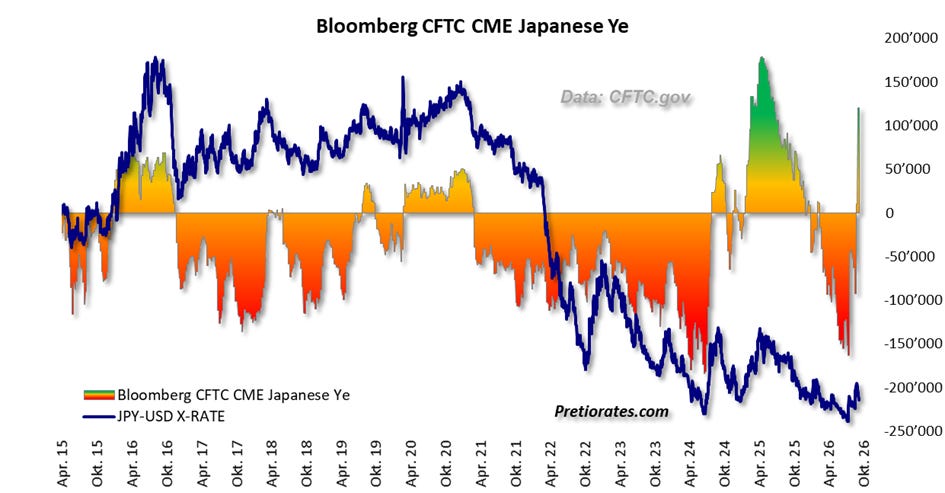
And even the Japanese yen, which was still clearly struggling just a short while ago, is suddenly making a comeback. There, too, demand in the futures market is rising sharply. International capital is apparently searching quite urgently for a new home.
Corporate bonds and stocks are also potential alternative destinations when capital flows out of government bonds. However, this is only to a limited extent. Experience shows that the stock market, in particular, becomes nervous as soon as developments in the bond market indicate increasing risks. This is exactly what we’ve observed again for the first time in recent days: the spreads between bonds of different credit ratings are beginning to widen. In other words: The market is once again taking a closer look at whom it’s actually lending money to. Our chart shows this trend in inverse terms.
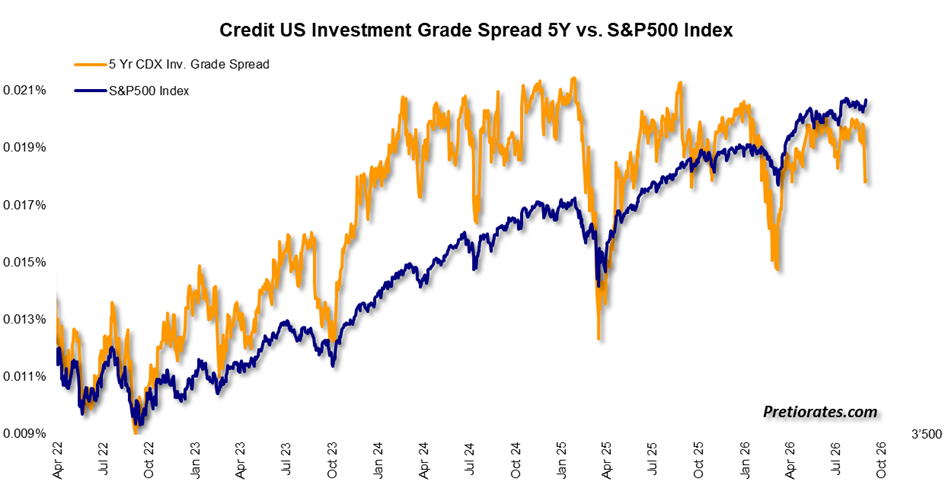
Historically, such a widening of spreads in the stock market has often been a harbinger of a faster heart rate—or, to put it in less medical terms: a correction.
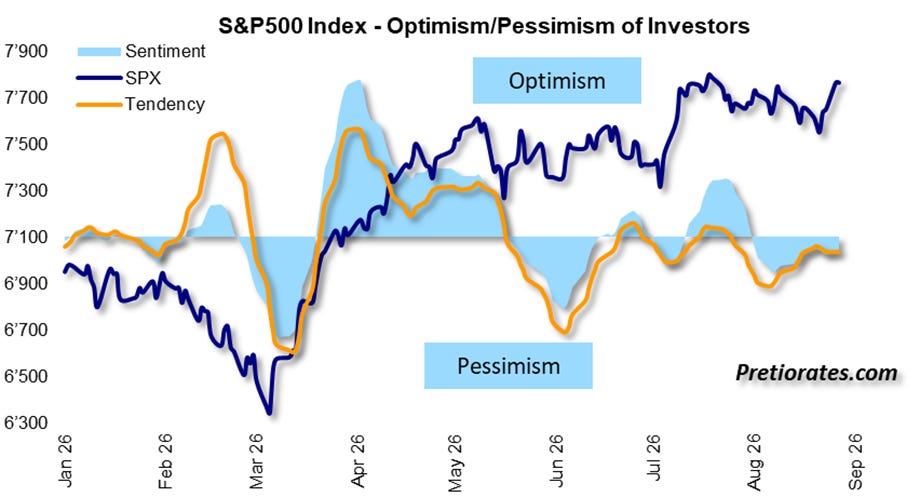
Sentiment in the S&P 500, however, has not yet suffered any major damage. For several weeks now, it has merely been hovering slightly in negative territory. Today marks the beginning of fall. And we know from experience: the fiercest storms tend to strike during this time of year.
And once again, the conclusion is the same as in several of Pretiorates’ Thoughts over the past few weeks: Precious metals and cryptocurrencies are likely to be among the biggest beneficiaries of the current trend. Experienced investors know, however, that even these two asset classes won’t escape unscathed in the initial phase should an “autumn storm” indeed sweep through the markets in the coming weeks. Precisely because they are liquid, they tend to be sold off during such periods when investors suddenly want only one thing: cash. Experience shows, however, that this is usually only a temporary phenomenon—as soon as the storm subsides, the structural arguments come back to the forefront.
We wish you successful investments!
If you enjoyed this issue, please click on the Like icon at the top or at the bottom of this email. This is very important in helping our Thoughts gain more followers. And don’t forget to recommend us - with the button below. Thank you!
Yours sincerely,
Pretiorates
Find out more about Pretiorates.com
Remember, we are not making any recommendations for investments, we are just giving you ideas for your own analysis and decisions! Do your own due dilligence!
If you like our short analysis, please recommend us to your friends!
Thank you for being a part of the Pretiorates community. Stay tuned for more updates, analyses, and deep dives into the realms of finance and economics.