

In our analyses, we regularly examine current movements, identify possible influencing factors and assess the general market situation. However, these are not recommendations, but merely opinions and food for thought.
Find out more about Pretiorates.com
Pretiorates’ Thoughts – A Harsh Dose of Independence
Yesterday’s Fed meeting was eagerly anticipated. Not so much because of the decision itself—the quarter-percentage-point rate hike had long been priced in by the market. Much more intriguing was the question of how independent the new chairman, Kevin Harsh, would appear to be and how he would frame the rate hike. Remember: Every additional increase in the U.S. interest rate also increases the pressure from the very top—from the White House and from U.S. President Trump.
To make a long story short: He passed the test. What’s more, the market was just as unenthusiastic as President Trump when Harsh hinted that another interest rate hike might be in store this year—in October or December. It was also noteworthy that yesterday’s interest rate hike was approved unanimously—a stark contrast to the vote at the Fed’s last meeting this summer.
The markets reacted with significant losses, but that was likely just short-term noise. Fed Chair Kevin Harsh presented himself as an independent decision-maker—and that is precisely what should help the recently quite nervous U.S. bond market, at least for now. New confidence is what the U.S. bond market needs most of all.
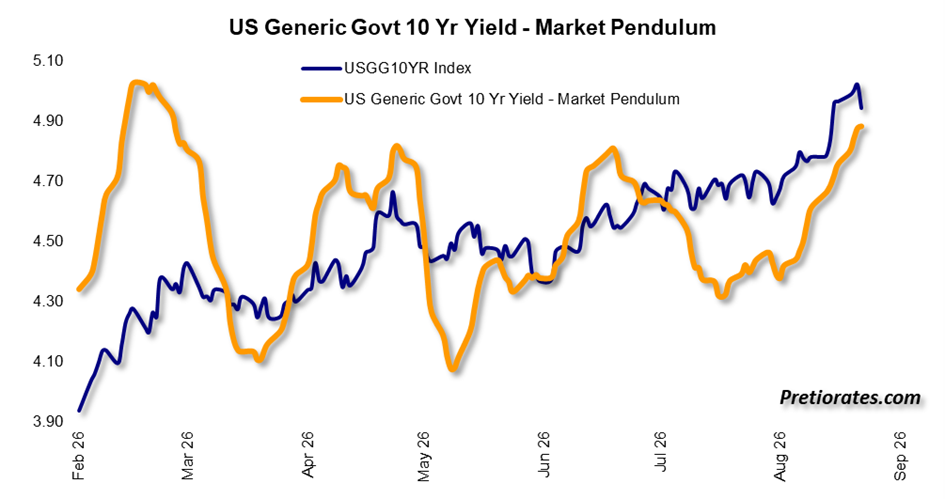
In fact, our Market Pendulum is also showing a surprisingly confident side – in the short term: Last week’s sharp rise—and with it, the rise in market yields—may have peaked for now. Although the key 5% threshold was briefly breached, the trend could reverse downward again in the coming weeks.
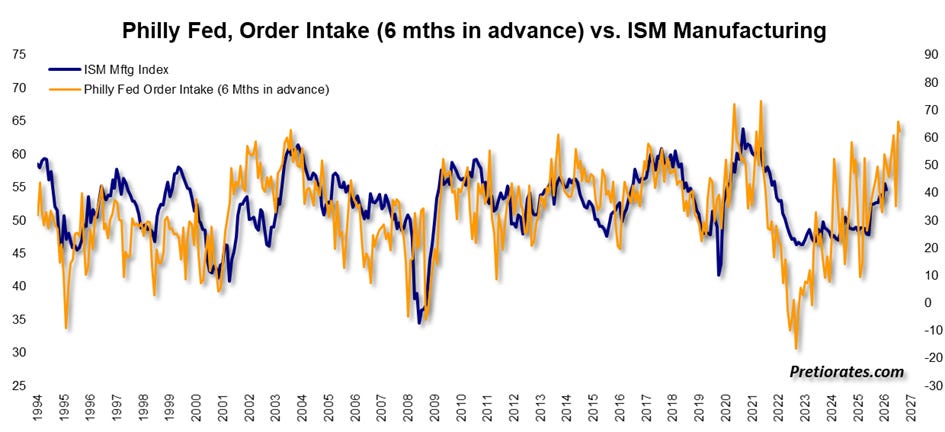
Fighting inflation is at the top of the Fed Chair’s priority list; by now, everyone should know that. An overheating economy, which is driving inflation due to excessive consumer demand, can certainly be reined in with higher interest rates. That’s exactly by the book. Thus, the rate hike is justified, because our preferred economic indicator—the Philly Fed Order Intake—shows that the U.S. economy continues to gain significant momentum.
However, the more intriguing question remains: how does he intend to combat rising energy and food prices—the production and transportation of which still largely depend on diesel-powered machinery and vehicles?
If farmers are unable to produce as much due to massive increases in fertilizer and diesel prices, thereby driving up food prices, a rate hike does very little to help. On the contrary: for many food producers who rely on short-term loans, this tends to raise the hurdles even higher. Nor is a higher interest rate likely to have much impact on price pressures in the energy markets. This certainly raises the question of whether the interest rate hike is actually the right tool to combat current inflationary pressures this time around. We’re opening the discussion…
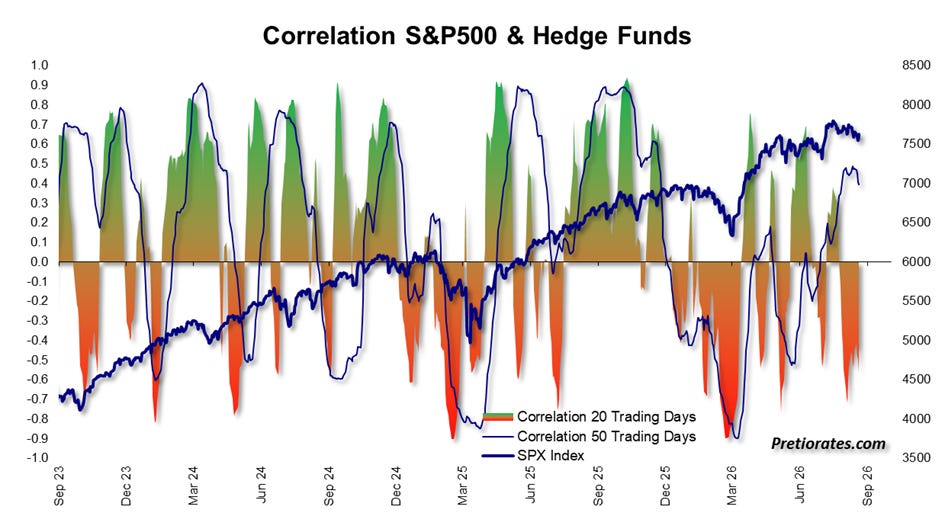
Once again: The credibility conveyed yesterday is likely to provide short-term support to both the bond and stock markets. And it will now be all the more interesting to see how hedge funds react to this in the coming days. In any case, since the end of August, they have been pursuing an asset allocation strategy that is decidedly bearish. If the effect of yesterday’s “calming pill” lasts a little longer, this could very well lead to a temporary short-covering rally.
Temporary, that is, because the actual problems haven’t suddenly disappeared, of course. Interest rates and excessive debt remain high, as do energy prices, and the broader geopolitical landscape still doesn’t exactly invite a sense of calm.
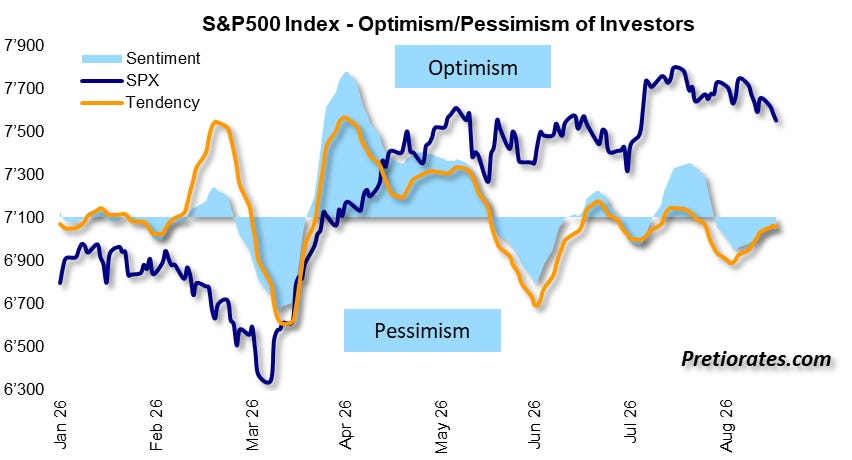
Smart Investors Action—that is, the behind-the-scenes moves of major investors—also continues to show distribution. Equity exposure is being gradually reduced. However, this is happening without panic and, so far, without any discernible time pressure.
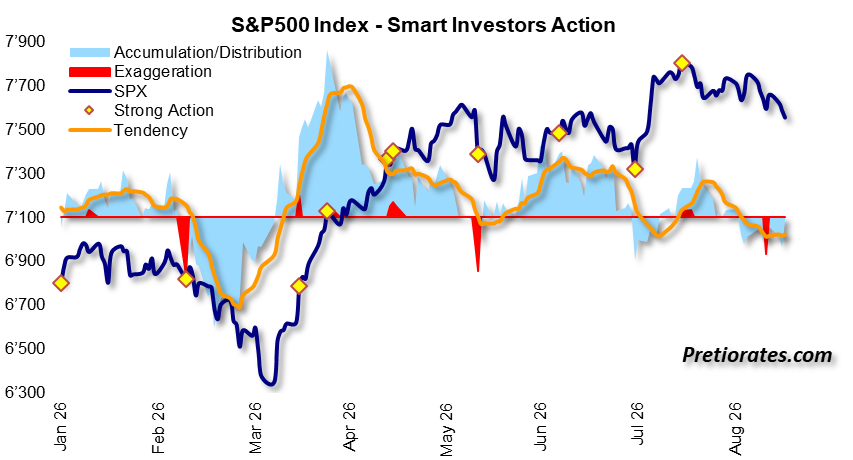
It’s also interesting that, despite the recent noticeable selling pressure on U.S. stock markets, sentiment has by no means become excessively pessimistic. This can have a stabilizing effect in the face of negative news and new headwinds and continues to support the possibility of a short-term rally. The underlying medium-term trend, however, is likely to point downward.
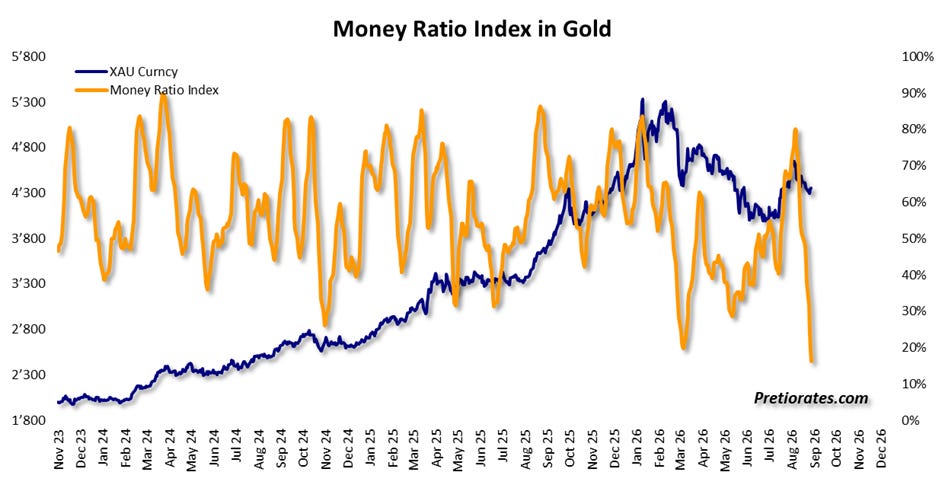
The price of gold also remains exceptionally interesting in the short term. With the latest interest rate hike and the resulting rise in real market yields, gold should actually have come under significantly greater pressure. The fact that this did not happen can certainly be interpreted as a sign of relative strength.
The selling pressure was enormous: the Money Ratio Index fell to its lowest level in more than three years. However, this wave of selling left surprisingly few traces on the gold price itself. Is this a sign that someone with considerable clout was standing by in the background and gratefully snapped up the entire supply?
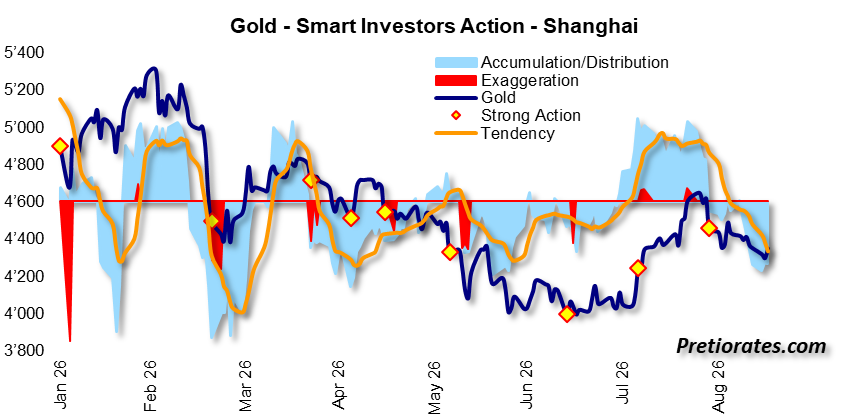
Even the Smart Investors Action indicator in the Chinese gold market recently showed significantly stronger distribution. The indicator has now, however, fallen to a level at which, in the past, the heaviest selling pressure had usually already subsided. This actually presents a rather interesting starting point suggesting that the gold price could trend upward again in the coming days and weeks…
We wish you successful investments!
If you enjoyed this issue, please click on the Like icon at the top or at the bottom of this email. This is very important in helping our Thoughts gain more followers. And don’t forget to recommend us - with the button below. Thank you!
Yours sincerely,
Pretiorates
Find out more about Pretiorates.com
Remember, we are not making any recommendations for investments, we are just giving you ideas for your own analysis and decisions! Do your own due dilligence!
If you like our short analysis, please recommend us to your friends!
Thank you for being a part of the Pretiorates community. Stay tuned for more updates, analyses, and deep dives into the realms of finance and economics.